As a designer, collecting inspiration is a fixed cost I pay every day: open Awwwards for the daily picks, browse newly added app flows on Mobbin, then swing by Godly and Land-book — each site means scrolling on my own, judging what’s new, and saving things one by one. No single session hurts, but it adds up to hours of repetitive work every week.
Eagle was the obvious destination: it’s already the library where I manage my visual assets, and it ships with a local API that works whenever the app is open. So I built this bot in collaboration with AI — every week it automatically pulls inspiration from four sources into Eagle, turning “actively chasing” into “delivered on schedule”.
The real design problem here wasn’t the scraping. It was two things: the tool couldn’t live only in the terminal, and if it was going to be open-sourced for other designers, the install experience had to assume they had never opened a terminal in their lives.
Design Decisions
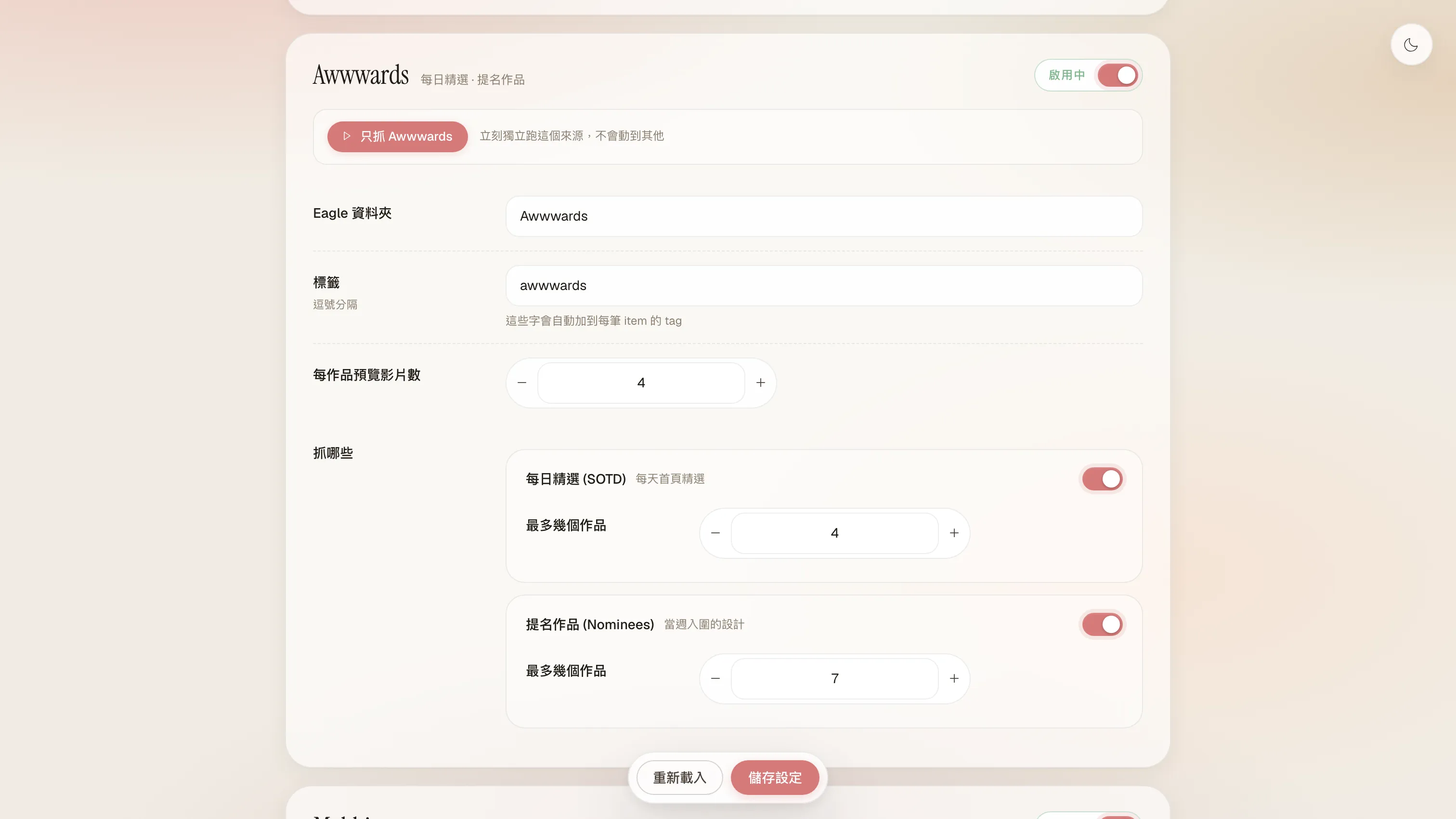
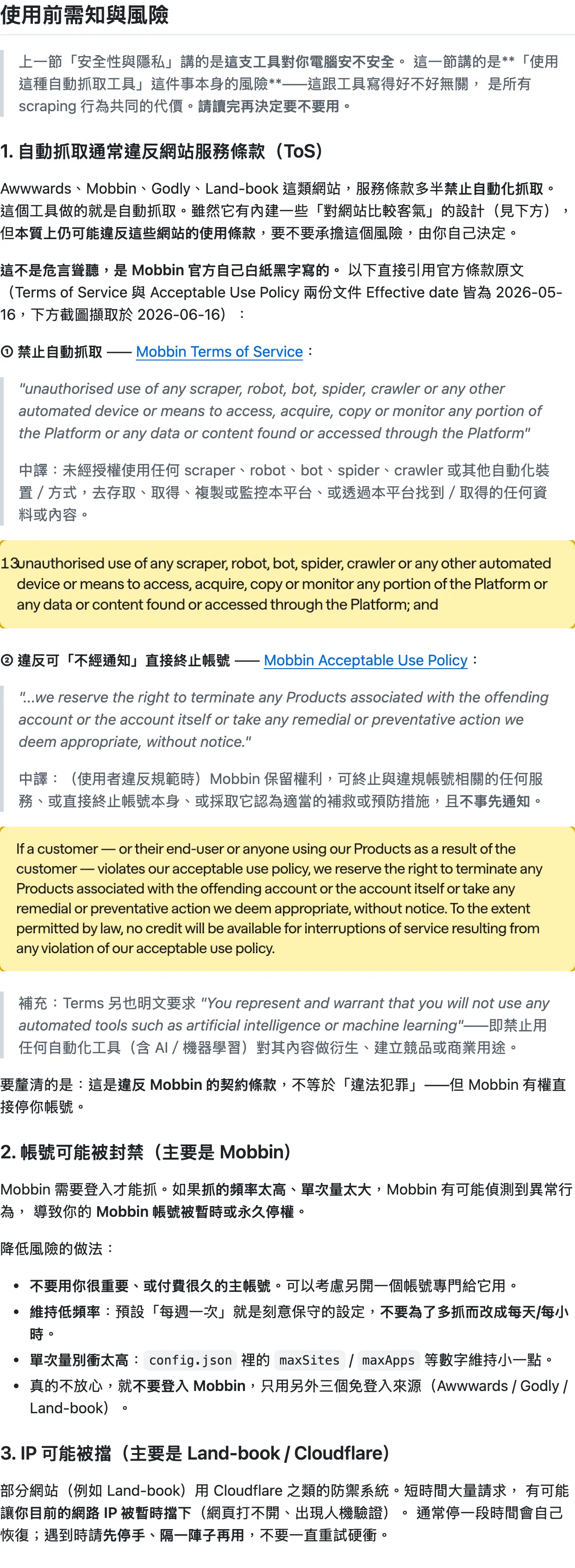
The web dashboard: each source has its own toggle and a 'fetch just this source' manual trigger, with counts and categories adjustable before each run — everyday use never touches the terminal.The README's risk disclosure section: it quotes Mobbin's terms of service verbatim and puts the account and IP risks ahead of the install steps.
Outcome & Reflections
The result is a complete little product that runs on the user’s own machine: it executes automatically every Monday and posts a desktop notification when it’s done. The main program is a single bot.js, the interface a single-file dashboard.html, and Playwright is the only external dependency.
Choosing the MIT license was part of the same decision as the security claims. I promise the tool never uploads your collection, never collects data, and only connects to those four sites — and rather than asking users to take my word for it, every claim can be verified: the code is fully public, unobfuscated, with minimal dependencies, and any engineer can scan it in ten minutes. The README even suggests having a friend who codes look over bot.js before installing.
Looking back, this project was about applying design skills to my own workflow: spotting an invisible cost I was paying daily, defining the problem, building the tool, and then flattening the on-ramp for non-engineers like me. The scrapers will need maintenance whenever a site redesigns, but the ability to build tools for myself is here to stay.