My day job is UI/UX design, but before that I studied sculpture. Graduate school left me with a body of sculptural work, and over the years I had also built up a collection of illustrations — all of it scattered across hard drives and social media accounts. I wanted to give these pieces a container worth remembering: not another grid of thumbnails, but a website that feels like a work in its own right.
The direction came from cables.gl’s “Project Sphere”: the entire site is a single full-screen 3D scene — no page transitions, no long scrolling, everything lives on one sphere. Coming from sculpture, the idea felt instantly familiar: visitors aren’t flipping through a catalog, they’re walking around a piece. The challenge was that WebGL and shaders were beyond what I could build on my own — and that was exactly where collaborating with AI came in.
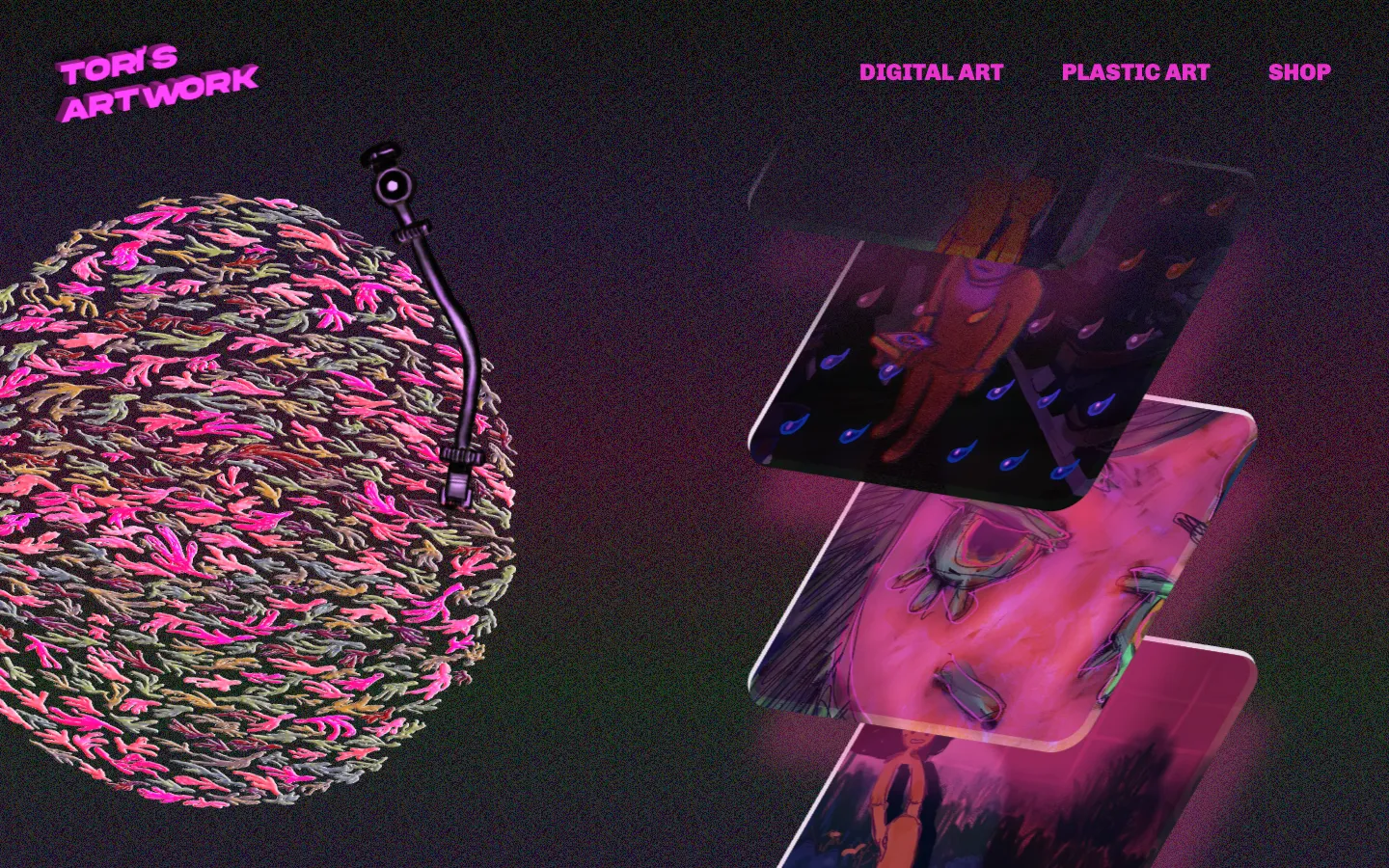
This wasn’t my first attempt. The original v1 was the first website I ever hand-coded — a multi-page affair with a home page, a sculpture page, even a shop, navigated by scrolling and page switches. It worked, but it read more like a tidy catalog than a piece in its own right, missing the very “work-ness” I was after. So v3 became a ground-up rebuild.
v1 · multi-page, hand-coded
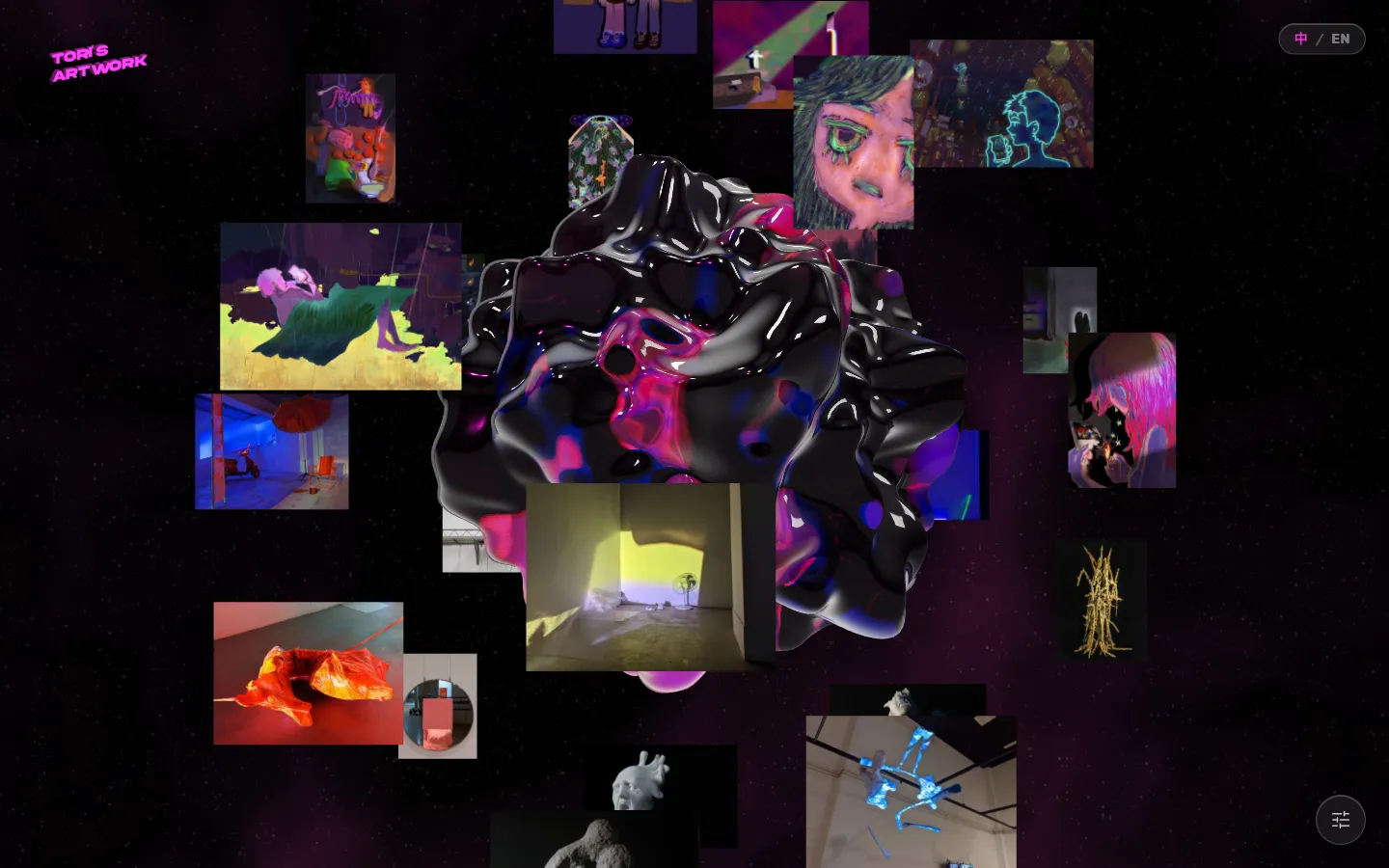
v3 · single-screen Project Sphere
From the first multi-page site (home + sculptures + shop) to v3, which packs the entire portfolio into one sphere you can spin
Design Decisions
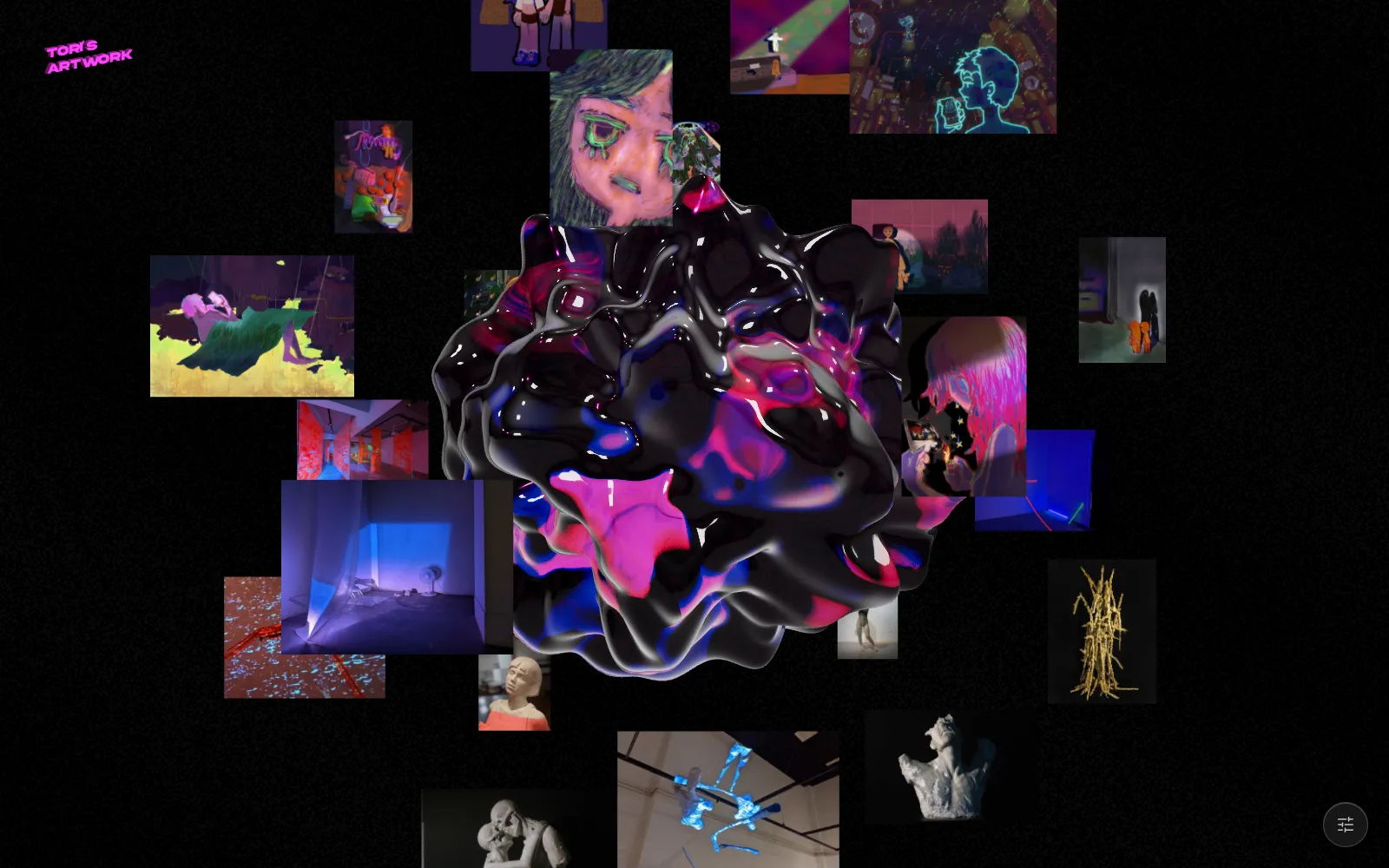
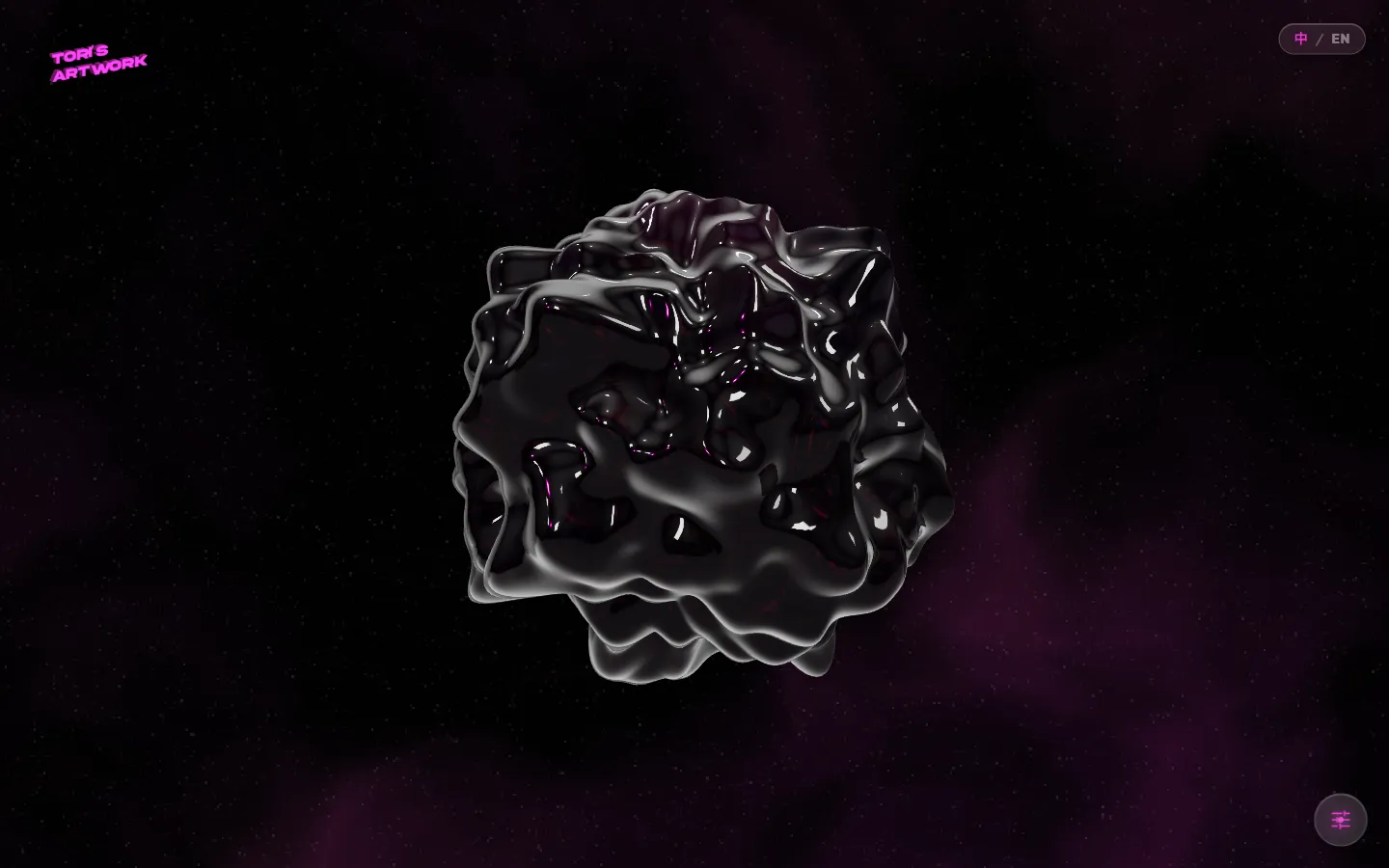
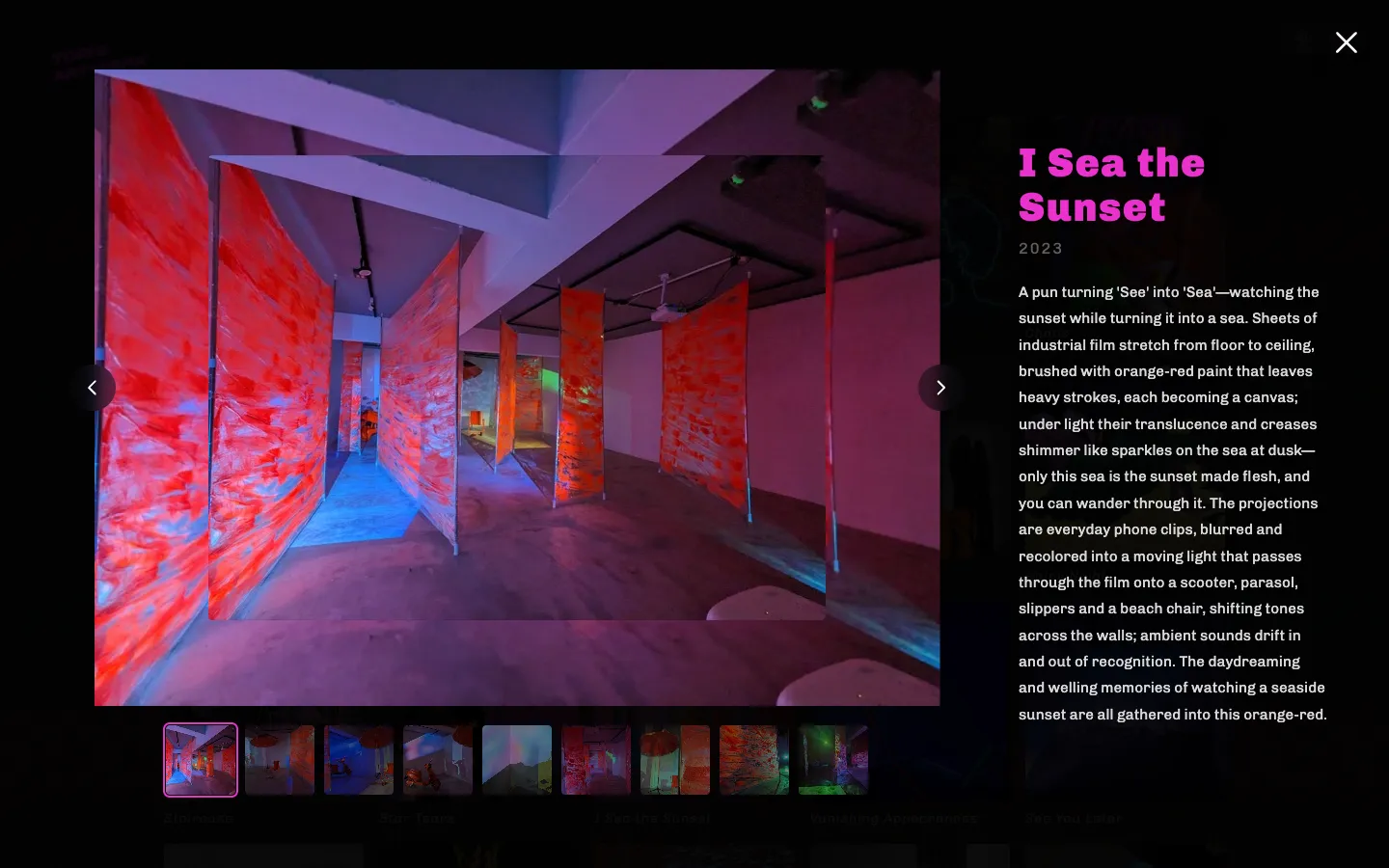
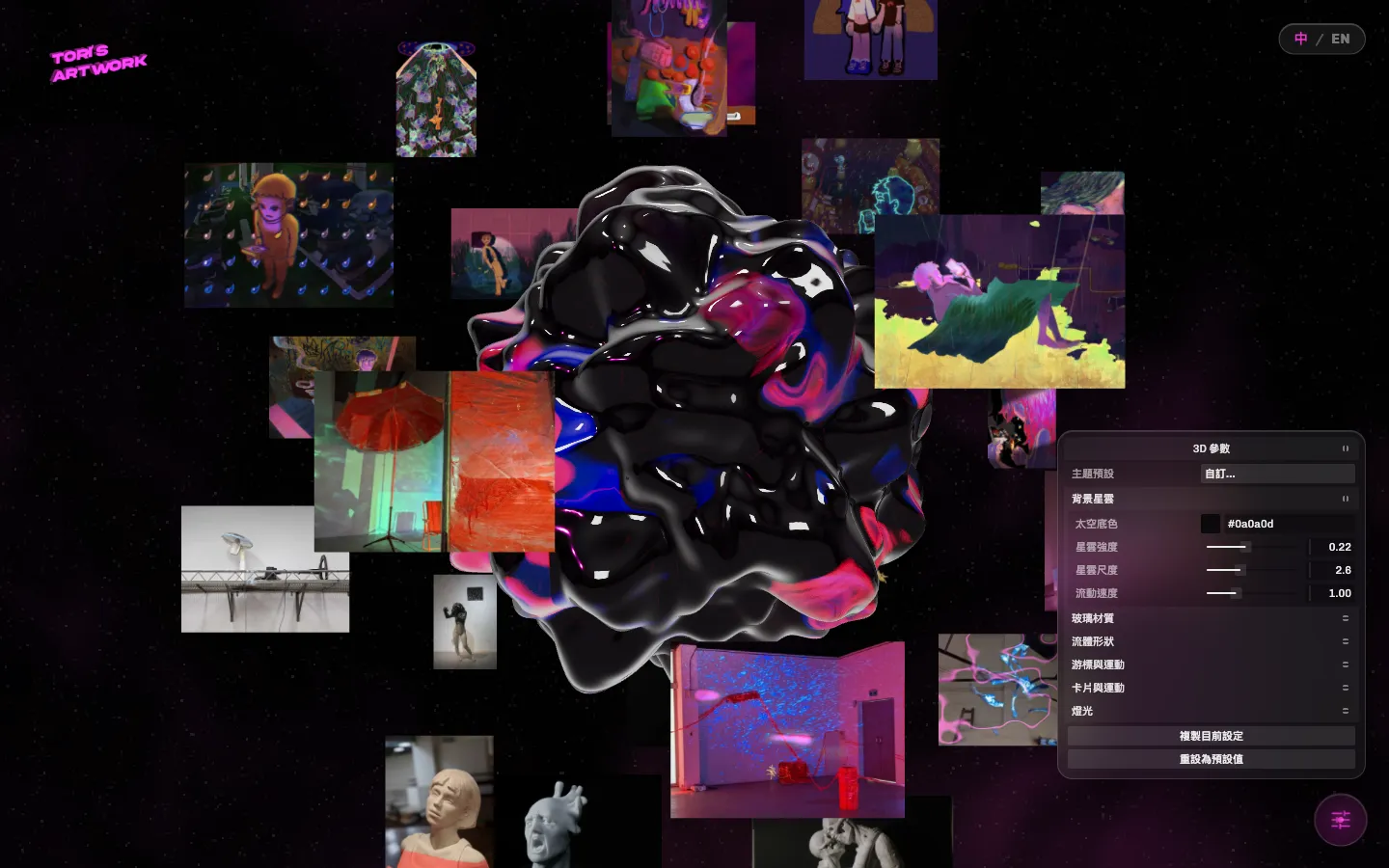
Project Sphere overview: 24 work cards on a fibonacci sphere rotating around the central fluidThe central fluid with the work cards hidden: glass transmission plus noise-driven vertex displacement, over a separate layer of drifting nebula — most pixels stay near-black, magenta glows through only where the clouds gatherLightbox mode, image and text side by side: the installation shots of the sculptural work 'I Sea the Sunset' (2023) switch via thumbnails, with an artist statement drawn from my master's thesis on the rightThe live control panel: six tunable parameter groups and five glass presets — the back-and-forth of tuning the look with AI, laid out in the open
Outcome & Reflections
v3.1 is live, deployed on Cloudflare Pages and published automatically via GitHub Actions. The central glass fluid was later extracted into a reusable module, fluid-blob, with both Embed and Standalone mounting modes and a Traditional Chinese README — the whole folder can be dropped straight into other side projects.
Looking back, this project means two things to me. The first is the content: my illustrations and sculptural work finally have a home worthy of them. The second is the process: shaders and noise displacement — techniques that used to be out of reach — became materials I could experiment with freely through AI collaboration. I handled the aesthetic judgment and material intuition; AI translated that intuition into code. In a way, this is the first sculpture I have finished since leaving sculpture.